

5 Habits That May Make Sinus Infections Feel Worse
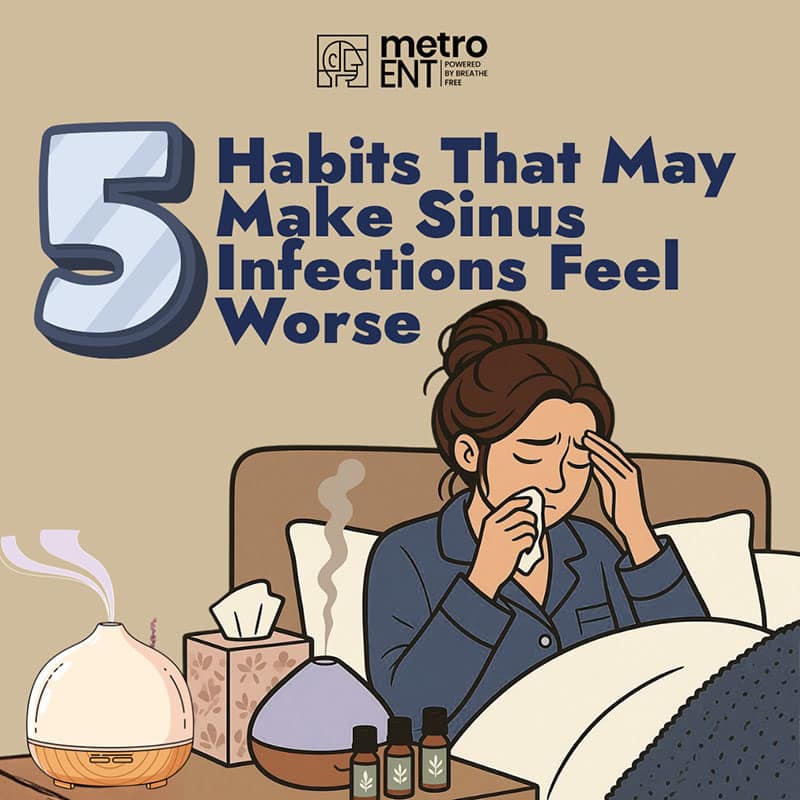
When your nose is blocked and your face feels sore, you probably want to do whatever will help you breathe normally again. You might reach for a nasal spray or just push through your day.
But a few everyday habits can add to the irritation. They don’t necessarily worsen the infection, but they may increase your discomfort.
Here are five worth paying attention to.
QUICK ANSWER:
What Can Make Sinus Symptoms Worse?
Smoke exposure, overusing certain nasal sprays, unsafe sinus rinsing, unmanaged allergies, and not getting enough rest or fluids can make sinus symptoms harder to manage. Small changes may help.
1. Spending Time Around Cigarette Smoke
Cigarette smoke irritates the lining of your nose and airways. That extra irritation can feel especially unpleasant when you’re congested.
Smoking and exposure to secondhand smoke are also recognized risk factors for sinus infections. If you smoke, consider getting support to quit. Ask others not to smoke around you.
2. Using Decongestant Nasal Spray for Too Long
A nasal decongestant spray can seem like a lifesaver when you can’t breathe through your nose. Trouble starts when you use it longer than recommended.
Sprays containing ingredients such as oxymetazoline can cause rebound congestion with repeated overuse. Your nose becomes stuffy again as the medication wears off.
Follow the product’s time limits, often just three days for oxymetazoline, and ask a pharmacist or clinician if you’re still relying on it. Saline sprays work differently and don’t cause this type of rebound effect.
If you’ve already been using a medicated spray too long, ask a healthcare professional how to stop safely rather than increasing the dose.
3. Rinsing Your Sinuses With Tap Water
Saline rinses can be helpful for clearing mucus. But if you’re filling a neti pot or squeezing a bottle straight from the faucet, it’s time to change that habit.
Tap water can contain organisms that are safe to swallow but unsafe to introduce into your nasal passages. Use distilled, sterile, or previously boiled and cooled water with an appropriate saline mixture.
Wash and dry your rinse device after use, too. Follow the manufacturer’s instructions, since rinsing with plain water can also cause irritation.
4. Ignoring Your Allergy Triggers
Sometimes the infection starts after a cold, but allergies can keep your nose feeling swollen and congested long afterward.
If pollen, dust mites, or pet dander trigger your symptoms, continuing to expose yourself without managing those allergies may add to the discomfort. In North Texas, seasonal pollen can further complicate sinus symptoms.
Pay attention to patterns. If congestion flares after yardwork, cleaning, or time around animals, mention it during your ENT visit.
Treating the allergic inflammation may be part of managing recurring sinus symptoms. Sneezing and itchy eyes, for example, may point toward allergies rather than another infection.
5. Pushing Through Without Rest or Fluids
It’s tempting to carry on as usual, especially when symptoms seem manageable. But feeling run-down, sleeping poorly, and forgetting to drink fluids can add to your discomfort.
Rest and fluids won’t cure a bacterial infection, but they can support your recovery and comfort.
Keep water nearby, make time for sleep, and consider a warm compress over your cheeks or forehead if pressure is bothering you.
When Should You See an ENT?
Contact a healthcare professional if symptoms last more than 10 days without improving, worsen after you initially feel better, or keep coming back.
Severe facial pain, a persistent fever, or an unusually severe headache warrants medical assessment. Seek urgent care for eye swelling or vision changes.
An ENT can look for underlying causes, such as ongoing inflammation, allergies, or blocked sinus drainage pathways. Not every sinus infection requires antibiotics or surgery.
Sick of the Same Sinus Symptoms? Get Answers at Metro ENT!
If sinus pressure and congestion keep returning, it’s worth finding out what’s behind them.
At Metro ENT in Mesquite, TX, our team evaluates persistent and recurring sinus symptoms and discusses treatment options based on the underlying cause.

Leave a Comment